Wearing Your Worldview: Why the Nike Dunk Became Gen Z's Realest Form of Self-Expression
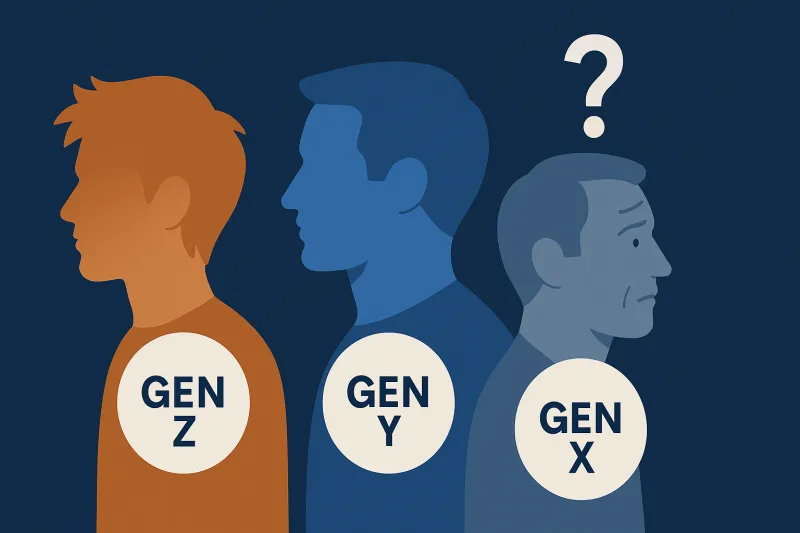
Photo: Gen Z sneaker culture Nike Dunk street style youth fashion authenticity, via h-in-q.com
There's a moment that happens pretty regularly on college campuses across the country right now. Two strangers clock each other's feet, make eye contact, and something passes between them — a nod, a half-smile, an unspoken I see you. No words exchanged. No introduction needed. The shoes did the talking.
Nine times out of ten, those shoes are Nike Dunks.
It sounds simple. It's anything but. The Dunk's rise as Gen Z's go-to silhouette isn't really a sneaker story — it's a sociology story, a psychology story, and honestly, a pretty fascinating window into how a generation communicates who they are and what they care about without ever opening their mouths.
The Shoe as Social Currency
Every generation has its totems. Boomers had their Chuck Taylors. Millennials had their Air Force 1s and Jordans. Gen Z — the cohort roughly born between the late '90s and the early 2010s — landed on the Dunk, and the reasons run deeper than algorithm-driven hype cycles.
Psychologists who study consumer identity talk about something called symbolic self-completion — the idea that people use objects to signal and reinforce aspects of their identity, especially when that identity is still being formed. For a generation that came of age during a period of intense social fragmentation (a global pandemic, political polarization, the full chaos of social media adolescence), the need for visible markers of belonging hit differently.
The Dunk checked every box. It had roots in skateboarding, basketball, punk, hip-hop, and high fashion simultaneously. It wasn't owned by any one scene, which paradoxically made it perfect for all of them. You could wear a beat-up pair of '80s-colorway Dunks to a hardcore show in Philly and a crisp SB collab to an art opening in LA, and in both rooms, someone would understand the reference.
That versatility isn't accidental — it's the whole point.
Different Scenes, Same Shoe
Walk through the different spaces where Gen Z gathers and the Dunk keeps showing up, but it's doing different work in each one.
At the skate park, a worn-in pair of SB Dunks — preferably one with some actual scuff history — signals that you're not a tourist. The SB line has always carried that gatekeeping energy, rooted in the early 2000s when Nike had to earn its place in skate culture after years of being seen as too corporate. A clean pair right out of the box can actually work against you in that context. The wear is the credential.
On college campuses, the calculus shifts. Here, the Dunk operates more as a cultural literacy test. Showing up in a well-chosen collab or a deep-cut colorway that didn't get mainstream press coverage communicates that you know the history, that you did the research, that you're tapped in. It's the sneaker equivalent of dropping an obscure reference in a conversation and watching to see who catches it.
At music venues — the indie shows, the rap showcases, the DIY spaces — Dunks function almost like a scene passport. The specific colorway often maps to genre allegiances in ways that would take an outsider months to decode. Low Dunks in earthy tones at a bedroom pop show. High Dunks in bold blocking at a rap event. The shoe becomes a dialect.
The Conformity Paradox
Here's where it gets genuinely complicated, and worth sitting with for a minute.
Gen Z is widely described as a generation that prizes individuality and authenticity more than any before it. They're skeptical of corporate messaging, allergic to anything that feels performative or fake, and deeply invested in the idea that what they wear reflects who they actually are rather than who they're being told to be.
And yet — they've collectively landed on a single shoe silhouette as their primary identity marker.
There's a term for this: non-conformist conformity. The drive to stand apart from mainstream culture can create its own rigid dress codes, its own in-group rules, its own version of the uniform it was supposedly rejecting. When every person at the skate park, the campus quad, and the basement show is wearing Dunks to signal their authenticity, the signal starts to blur.
This isn't a knock on the shoe or the people wearing it — it's just how subcultures work. They always have. The punk kids in '77 London were all wearing the same ripped jeans and safety pins. The hip-hop heads in '90s New York all had the same Timberlands. The uniform is part of the culture. The question is whether you're wearing it consciously or on autopilot.
The Dunk enthusiasts who seem most genuinely connected to the shoe's deeper meaning are the ones who can tell you why — why that specific colorway, why that specific moment in their life, why that particular pair represents something real to them. The shoe becomes a vessel for actual story rather than just a visual cue that you've watched the right YouTube channels.
What Authenticity Actually Looks Like
Ask around in any serious Dunk community and you'll hear the same thing: the people who wear the shoe best aren't necessarily wearing the rarest pairs. They're wearing the ones that mean something.
There's the kid in Atlanta who saved up for three months to cop a pair in the colorway his favorite rapper wore in a video from 2003, a video he found at 2am down a YouTube rabbit hole when he was fourteen. There's the girl in Portland who wears a beat-up pair of SB Dunks her older sister bought in high school, not because they're valuable but because they're hers in a way no new pair could ever be. There's the guy in Chicago who builds his entire fit around a colorway that matches the color of his grandmother's front door back in Lagos.
Those are Dunks as identity. Those are Dunks as autobiography.
The shoe can absolutely function as a shortcut — a way to buy your way into a scene's visual language without doing the cultural homework. But it can also function as something much more interesting: a starting point for a real conversation about where you come from, what you love, and what you're trying to say about yourself to the world.
Lacing Up With Intention
Gen Z didn't accidentally land on the Nike Dunk as its generational silhouette. The shoe earned that position by being genuinely multivalent — capable of living in multiple cultural worlds at once, carrying decades of real history across music, sport, and street style, and offering enough variety in colorway and collab that it rewards the curious and the committed.
But like any symbol, it only means as much as the person wearing it brings to it. The Dunk uniform is real. The question every person lacing up a pair gets to answer for themselves is whether they're wearing it or it's wearing them.
For a generation that cares more about that distinction than probably any before it, that's not a small question. It might actually be the whole point.