Sneaker Love or Sneaker Hustle? How Resale Culture Is Reshaping the Dunk Community
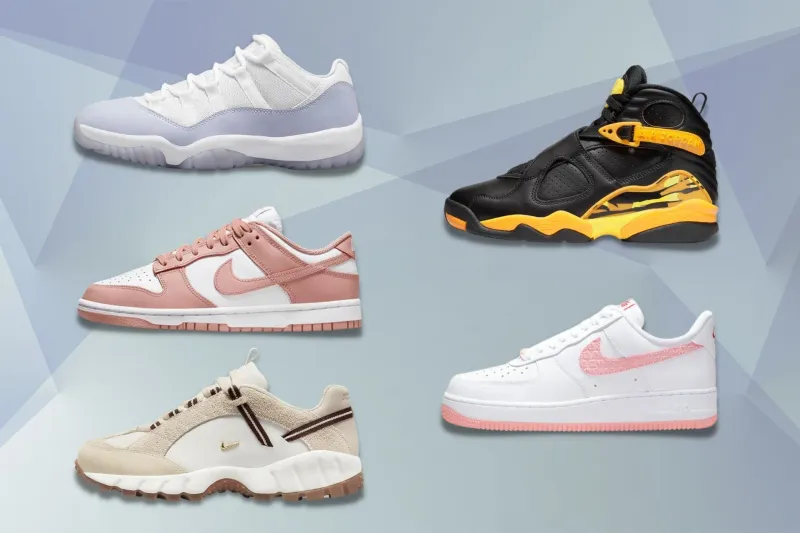
Photo: sneakers resale market price tags collection display, via staticg.sportskeeda.com
There's a moment every serious Dunk collector knows. You wake up early, you've done your research, you've got your accounts ready and your shipping address saved — and then the clock hits drop time and you're staring at an error screen while bots have already swept the inventory. By the time you reload, those same pairs are on GOAT for three times retail.
It's frustrating. It's also, depending on who you ask, just the market doing what markets do.
But something more complicated is happening underneath all those resale listings. The secondary market for Nike Dunks has grown so fast and so loud that it's started to drown out the original signal — the one that said sneakers were about community, creativity, and personal expression first. Whether that's a crisis or just an evolution depends entirely on who's lacing up and why.
When the Hobby Became a Hustle
Ask anyone who was buying Dunks in the early 2000s and they'll tell you the vibe was different. The SB line was a skate thing, a niche thing. You found out about a pair through a local shop, through a zine, through a friend who knew somebody. The resale market existed — it always has — but it wasn't the dominant force shaping which shoes got made and who could actually wear them.
Fast forward to now and the numbers tell a different story. The global sneaker resale market is projected to hit $30 billion by 2030, and Dunks sit near the top of the most-flipped silhouettes. When the Travis Scott and Fragment collabs dropped, pairs were hitting secondary prices that rivaled vintage Jordans. Regular retail Dunks — not even limited collabs — started moving at 150%, 200% over retail within hours of release.
Longtime collector Marcus Webb, who's been building his rotation since 2004 out of Atlanta, puts it bluntly: "The game changed when kids stopped asking 'do I love this shoe' and started asking 'what's the resale value.' That's not collecting. That's a portfolio."
He's not wrong, and he's not alone in that read.
The Bot Problem Nobody Wants to Talk About
Here's where the frustration really lives for most community members: it's not just that resellers exist. It's that the tools available to high-volume resellers have made the playing field genuinely unequal in ways that feel almost impossible to fight.
Botting — using automated software to enter raffles and purchase inventory faster than any human could — has become standard practice for anyone running a serious resale operation. Nike's SNKRS app has tried countermeasures with randomized draws and verified purchase systems, but the cat-and-mouse dynamic means that for every patch, there's a workaround.
Jasmine Tran, who runs a small sneaker community Discord out of Houston, describes the psychological toll: "You lose enough drops in a row and you start to feel like the whole thing is rigged. Because honestly? It kind of is. And when the culture stops feeling accessible, people stop caring about it the right way."
The irony here is sharp. The resale market is often framed as democratizing — anyone can sell, anyone can buy, prices reflect real demand. But when the buy-side is dominated by bots and the sell-side is dominated by people who never intended to wear the shoes, the average enthusiast gets squeezed out of both ends.
The Other Side of the Flip
To be fair, not every reseller is a faceless bot operator running warehouse inventory. Some of the most knowledgeable people in sneaker culture got their start — and fund their collections — through strategic reselling.
Derek Okonkwo started reselling out of necessity when he was in college in Chicago. "I couldn't afford to keep every pair I wanted, so I'd flip two to fund one. That's how I built my collection," he says. "People act like reselling is this evil thing, but it's also how a lot of us stayed in the game when we didn't have the budget to just buy everything we loved."
There's a real distinction worth drawing here between the collector who sells to sustain a passion and the investment-minded operator who views Dunks the same way a hedge fund views commodities. The former has always been part of sneaker culture. The latter is something newer, and its scale is what's changed the dynamics.
Small independent shops like Portland's Laced Proper and Miami's Court Culture have tried to thread this needle by implementing in-store raffles, purchase limits, and loyalty programs that prioritize customers who actually wear their shoes. "We're not trying to be the stock market," says one shop owner who asked to remain unnamed. "We're trying to be a community spot. That means sometimes taking the L on hype inventory to keep the right people in the room."
Does Hype Kill Love?
The deeper question the Dunk community keeps circling is whether financial speculation and genuine cultural passion can coexist at scale — or whether the money eventually hollows everything out.
History offers some cautionary tales. The art world went through a similar transformation when contemporary works became investment vehicles, and critics have argued that financialization changed what got made, who made it, and who got to be part of the conversation. Sneaker culture isn't art, exactly, but the parallel isn't nothing.
What makes Dunks specifically interesting in this conversation is that the silhouette has always carried a dual identity — functional sport shoe and cultural artifact — and that duality might be its best protection against total commodification. You can't really fake wearing a Dunk. The shoe still has to live on a foot, on a court, on a sidewalk. Its meaning still gets made in community spaces, in fit photos, in the way someone laces them up.
Marcus Webb, back in Atlanta, says he hasn't stopped collecting despite everything. "I still love the shoe. The shoe didn't change. The noise around it changed. You just have to decide what you're in it for."
That might be the most honest answer the community has right now. The resale market isn't going anywhere, the bots aren't disappearing, and the hype cycle will keep spinning. But the culture underneath all of it — the real reason any of us started paying attention to a vulcanized sole and a leather upper in the first place — that part is still there if you want it.
You just have to want it for the right reasons.