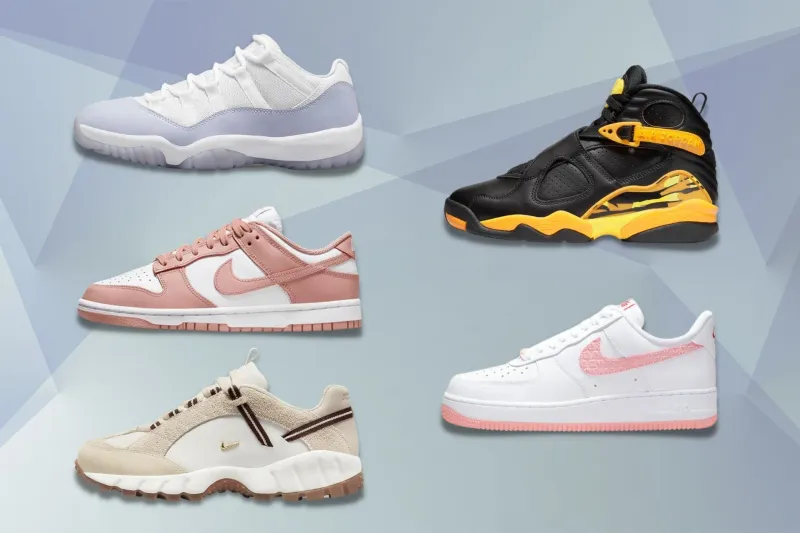
More Than a Shoe: The People Whose Stories Are Written in Dunk Leather
Photo: diverse people sneaker culture community street basketball court urban, via i5.walmartimages.com
There's a version of the Dunk conversation that's all about numbers — retail prices, resale values, release dates, and market caps. That conversation is real and it matters to a lot of people. But it leaves out the most interesting part: the humans.
Because behind every iconic colorway, every worn-in pair, every custom job, and every community that has claimed the Dunk as its own, there are actual people with actual stories. The shoe has a way of showing up at turning points — in careers, in relationships, in neighborhoods, in whole scenes that wouldn't exist without it. We talked to a handful of those people. Here's what they had to say.
The Skater Who Found Himself in a Shoe
Darius grew up in Southeast San Diego in the mid-2000s, at a time when Dunks were starting to crossover hard from basketball courts into skate culture. He was 14 when he saved up enough from mowing lawns to buy his first pair — a beat-up set of Dunk Lows from a local shop that had been sitting on the shelf too long.
"I didn't even know they were Dunks at first," he says now, laughing. "I just knew they were flat enough for my board and they looked right. My friends started asking about them and I was like, let me find out what I actually bought."
That curiosity turned into an obsession that turned into a career. Today Darius runs a small skate shop in Chula Vista that stocks both hardgoods and a carefully curated selection of footwear. Dunks are always on the wall. "They're still the shoe that connects everything for me," he says. "Skate kids, basketball kids, fashion kids — they all come in and they all stop at the Dunks. It's the one shoe that crosses every lane."
He still has that first pair. The sole is worn through in two places. He keeps them on a shelf behind the register.
The Designer Who Grew Up Studying the Colorways
Marceline is a textile designer based in Atlanta who credits the Dunk's color theory with shaping her entire professional eye. As a kid, she would tear pages out of sneaker magazines and pin them to her bedroom wall — not because she could afford the shoes, but because she was fascinated by how Nike's designers were pairing colors.
"The Dunk is basically a masterclass in contrast," she explains. "You've got two or three distinct panels on the upper, and whoever designed the colorway had to make decisions about how those panels talk to each other. Sometimes it's harmonious, sometimes it's tension. Either way, it's intentional. I studied that before I knew I was studying it."
Her first big client project — a textile collection for a boutique hotel in Buckhead — was directly inspired by a Dunk colorway she'd loved since high school. "I couldn't tell them that at the pitch meeting," she admits. "But it's true. The color blocking, the weight of each tone against the others — it all came from staring at sneakers as a teenager."
She owns around forty pairs now, but she's quick to clarify that the collection isn't about flex. "Every pair in my closet taught me something. They're reference material as much as they're shoes."
The Coach Who Uses Kicks as a Teaching Tool
In a high school gymnasium in Chicago's South Side, Coach Terrence has been running an after-school basketball program for eleven years. He started it with $200 of his own money and a borrowed set of cones. These days, it serves about sixty kids per semester.
For the past three years, Terrence has incorporated a sneaker literacy component into the program — a monthly session where kids learn about the history of basketball footwear, the business of the sneaker industry, and how to evaluate what they're buying versus what they're being sold.
"These kids are spending real money on shoes — or their parents are," he says. "I want them to understand the difference between buying because you love something and buying because you've been marketed to. That's a life skill."
The Dunk is central to those sessions because of its longevity and its range. "You can trace the Dunk from 1985 to right now and show kids how culture shifts," Terrence explains. "How a shoe that was designed for the college hardwood ended up on skateboards, then on runways, then back to the courts. That's American history in a box."
Several of his former players have gone on to work in sneaker retail, footwear design, and marketing. He keeps in touch with most of them. "They all have opinions about Dunks," he says. "That's how I know the lessons landed."
The Reseller Who Walked Away From Resale
Not every Dunk story is a straight line. Kevin, 28, spent four years building a serious resale operation out of his apartment in Philadelphia before deciding to step back entirely.
"I was making money," he says flatly. "Good money. But I stopped loving the shoes. When everything becomes inventory, it stops being a hobby and starts being a job — and not even a job you like."
The moment he knew something had to change was when he found himself holding a pair of Dunks he'd been hunting for years and immediately calculating the margin instead of just being happy he found them. "That was it for me. I flipped them, took a break, and spent about six months just wearing shoes again instead of selling them."
He's still in the community — he runs a small Discord server focused on Dunk history and education — but he's kept his personal collection deliberately small. Twelve pairs. All worn. "I know every scuff on every one of those shoes," he says. "That means more to me now than any profit I made."
The Thread That Connects All of It
What's striking about all of these stories is how different they are — different cities, different backgrounds, different relationships with the same shoe. And yet they all point toward something consistent: the Dunk has a way of meeting people where they are.
For Darius, it was an entry point into identity and community. For Marceline, a visual education. For Terrence, a teaching tool. For Kevin, a mirror that showed him something about himself he needed to see.
That's what the best cultural objects do. They're not just things. They're vessels. They carry meaning that the people who make them can't fully predict, and they accumulate new meaning with every person who picks them up.
The Dunk has been doing that for four decades. Ask anyone who's really lived with them, and they'll tell you — the shoe is never just the shoe.