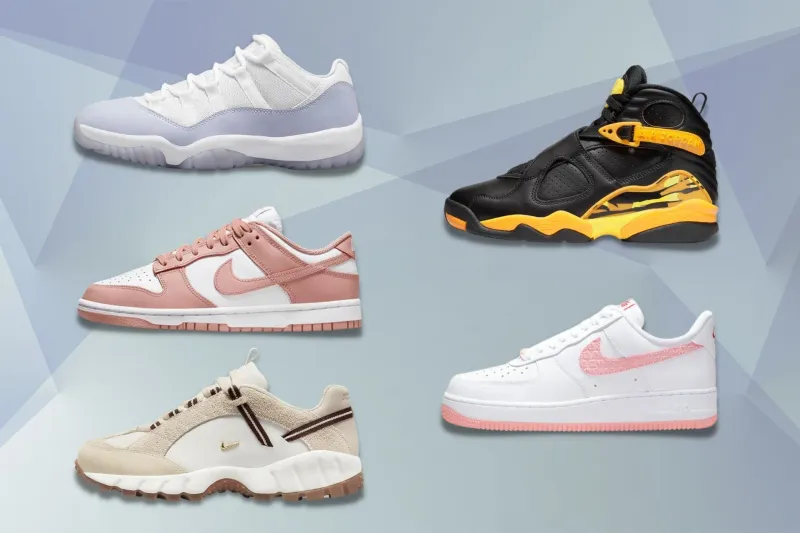
Court Cred vs. Street Cred: Who Really Gets to Claim the Dunk?
Walk into any sneaker convention, scroll through any Dunk-focused Discord server, or hang around long enough at a pickup game and you'll eventually hear some version of the same argument. It usually starts quietly — maybe a comment about crease marks, maybe a side-eye at someone who just pulled a fresh pair out of their bag at the gym. Then it escalates. Real Dunk heads play in them. No, real Dunk heads know you don't run a $180 shoe into the ground on a cracked blacktop court. Before long, two people who both genuinely love the same shoe are talking past each other like they're from different planets.
Here's the thing: they kind of are. And that's not a problem. That's just what happens when a shoe gets big enough to mean something to more than one world.
Where the Dunk Started — and Where It Went
Nike designed the Dunk in 1985 as a performance basketball sneaker. It was built for the court, distributed through college programs, and color-matched to team uniforms under the "Be True to Your School" campaign. That origin story is real, and the players who lace up a pair of Dunks on an actual court today aren't doing anything historically incorrect. They're, in a very literal sense, using the shoe the way it was intended.
But that's only part of the story. By the late '90s and early 2000s, the Dunk had migrated hard into skate culture, hip-hop, and street fashion. It picked up new communities, new colorways, and a completely different kind of cultural weight. The shoe didn't change — the world around it did. And by the time Nike retooled it for the collector market in the 2010s, the Dunk had become two things at once: a basketball shoe and a cultural artifact.
That dual identity is exactly what makes the ongoing debate so loaded.
The Baller's Perspective
Talk to someone who actually runs in Dunks and they'll often push back against what they see as sneaker culture's tendency to put shoes on pedestals. To a lot of hoopers, wearing a shoe — really wearing it, sweating in it, playing through it — is the highest form of respect you can pay to a piece of athletic footwear. There's something honest about it. The shoe does what it was made to do. You're not treating it like a collectible; you're treating it like gear.
Some players also point out that the collector mentality can feel exclusionary in low-income communities where sneakers have always been a way to express identity and participate in the sport. When a limited colorway drops at $120 retail and immediately flips for $400, it's not just collectors getting priced out — it's kids who actually want to ball in them. The idea that a shoe is "too nice" to play in can carry a class dimension that's worth acknowledging.
The Collector's Perspective
On the other side, collectors and fashion-forward wearers have their own completely coherent worldview. For them, the Dunk is a canvas — a piece of design history that carries stories about color theory, brand collaborations, regional aesthetics, and cultural moments. Wearing a pair of Supreme x Nike Dunks to the gym isn't just impractical; it's almost beside the point. The shoe's value, to this community, lives in its context, its rarity, and what it represents.
And honestly? That perspective has its own long history in American sneaker culture. Air Force 1s were being kept box-fresh on Harlem sidewalks decades before anyone called it "streetwear." The idea that you could love a shoe without using it athletically isn't a new or shallow thing — it's been part of how urban communities have engaged with Nike products since the '80s.
Collectors also make a fair point about craft. A lot of limited Dunk releases involve genuinely interesting design work — material choices, colorway stories, artist collaborations — that deserve to be appreciated on those terms, not just evaluated by how much ankle support they provide.
The Tension Is Real, But It Doesn't Have to Be a Hierarchy
Here's where it gets complicated: both communities sometimes use their own relationship to the shoe as a way to gatekeep. Hoopers can dismiss collectors as superficial hypebeasts who don't really understand what the Dunk is. Collectors can look down on players for "beater-ing" a shoe that should be treated with more care. Neither of those positions holds up under much scrutiny.
Authenticity in sneaker culture has never been a single thing. It's not measured in miles logged on the court, and it's not measured in resale value or how pristine your creases are. It's measured in how genuinely the shoe connects to who you are and where you come from.
A kid in Atlanta who plays pickup in beat-up Dunk Lows because they're what he could afford and they remind him of watching old NBA footage with his dad? That's authentic. A graphic designer in Portland who tracks down a specific 2003 colorway because it matches the palette of her favorite skate video? Also authentic. These aren't competing claims — they're just different chapters of the same ongoing story.
Why the Dunk Is Big Enough for Both
What's actually impressive about the Dunk, culturally speaking, is that it's managed to hold all of this without breaking. Most shoes don't survive that kind of tension. They either get absorbed entirely into one world or they get abandoned by both. The Dunk has stayed relevant across courts, streets, runways, and skate parks for four decades — and it's done that precisely because it doesn't belong to any single community.
If you play in them, lace up. If you collect them, respect the history. If you wear them as your daily rotation because they look good with everything you own, that's a completely valid reason too. The Dunk has always been about more than one thing, and the culture around it is richer for it.
Stop trying to decide who gets to claim it. The shoe already made room for everyone.