Lace Up, Sign Day: How Sneaker Choices Are Quietly Shaping the Recruiting Narrative for Elite Ballers
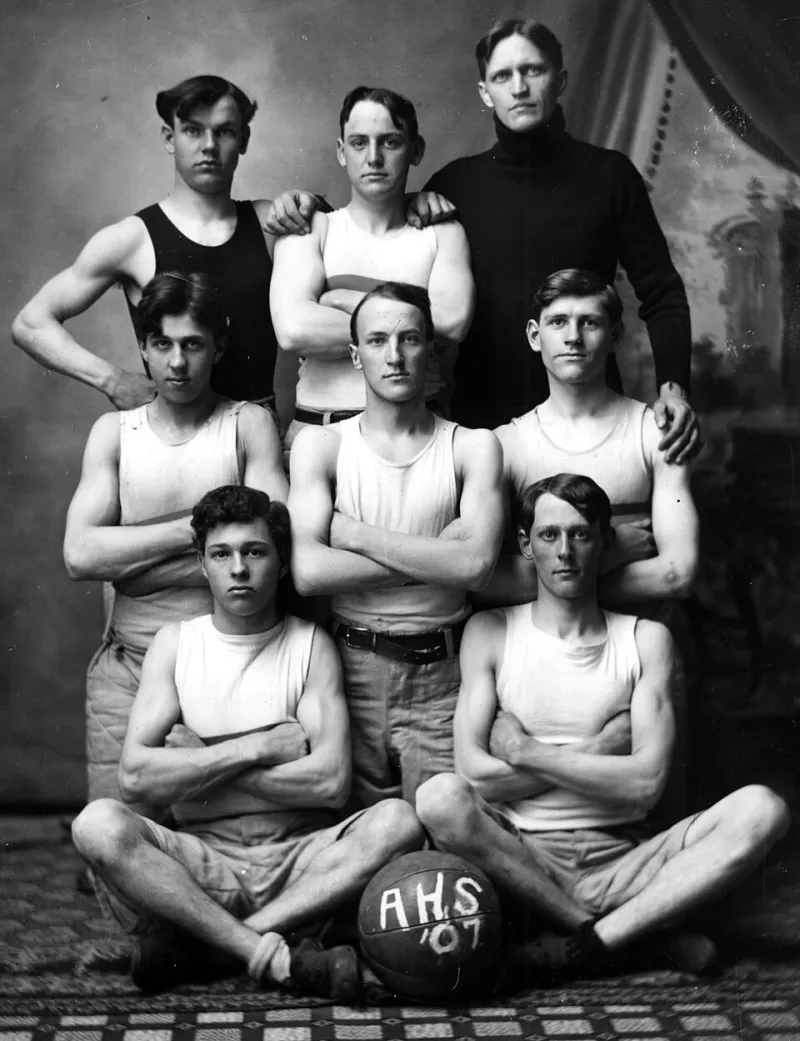
Photo: Unknown authorUnknown author, Public domain, via Wikimedia Commons
There's a moment at every elite high school basketball showcase — right before tip-off, when the warm-ups are still on and the scouts are still settling into their folding chairs — where the real analysis begins. Not with a stopwatch. Not with a stat sheet. With a glance down at the floor.
What's on the kid's feet?
It sounds like a stretch. But spend any real time around AAU circuits, grassroots tournaments, or the social media feeds of five-star recruits, and a pattern emerges. Sneaker choice — specifically, which Nike Dunk colorway a player rocks on and off the court — has quietly worked its way into the fabric of recruiting culture. It's not official. Nobody's putting it in a scouting report. But it's there, and the players know it.
More Than a Colorway
Ask Marcus T., a 6'4" shooting guard out of Atlanta currently fielding offers from four Power Five programs, why he wore a pair of Syracuse Orange-adjacent Dunk Lows to a major AAU showcase last spring. He'll give you a slow smile before he answers.
"People read into everything at that level," he says. "I'm not saying I wore those shoes because of Syracuse. But I'm also not saying I didn't think about it."
That kind of calculated ambiguity is exactly what makes sneaker culture and recruiting culture such a natural overlap. Both operate on signals. Both reward those who understand how image and perception compound over time. And both have audiences — coaches, scouts, media, fans — who are trained to pick up on subtle cues.
"These kids are building brands before they ever step on a college floor," says Darnell Okafor, an AAU coach who's guided multiple McDonald's All-Americans through the recruiting process. "The sneakers are part of that brand. They know it, and honestly, the coaches know it too."
The Dunk as a Recruiting Tool
Nike Dunks occupy a specific cultural lane that makes them uniquely suited for this kind of signaling. Unlike a player-exclusive Jordan or a signature model tied to a specific pro, Dunks carry a broader cultural identity — rooted equally in basketball heritage and street credibility. They're a shoe that says I know the history and I know what's current at the same time.
For recruits trying to communicate a certain kind of self-awareness — that they're not just athletes, they're cultural participants — the Dunk is a natural fit.
Colorway choices get especially specific. A recruit photographed in a pair of Dunk Lows that happen to match the palette of a school he's heavily considering? That's not always coincidence. Players and their inner circles are savvy enough to know that every Instagram post during the recruiting cycle is content. Every choice is intentional, or at least can be read as intentional.
"It's like a soft announcement," says Jordan Price, a recruiting analyst who covers the Southeast. "Back in the day, a kid might wear a school's hoodie to signal interest. Now it's more subtle. It might just be a colorway that lines up. But people in the know, they notice."
AAU Circuits and the Sneaker Economy
The AAU circuit is where a lot of this plays out in real time. Events like the Nike EYBL — where elite prospects compete in front of college coaches and professional scouts — have a fashion dimension that runs parallel to the athletic one. Players arrive with carefully curated looks. The shoes are always part of the conversation.
"At the EYBL, everybody's watching everybody," says Okafor. "The coaches are watching the players. The players are watching each other. And the shoes? The shoes are like vocabulary. You're saying something whether you mean to or not."
For players who've grown up in sneaker culture — who've been trading knowledge about Dunk drops and collabs since middle school — this isn't a stretch. It's just applying a language they already speak to a new context.
Some recruits go further, using limited-edition collabs or harder-to-find colorways to signal taste and discernment. Showing up in a pair that most people can't get — or wouldn't know to look for — communicates something about who you are beyond your vertical or your three-point percentage.
"There's a kid I coach right now," Okafor says, laughing a little. "Wears nothing but vintage and collab Dunks. Every coach who comes to watch him ends up asking me about the shoes before they ask about his recruitment. It works."
The Coaches Are Paying Attention
College coaches won't go on record about sneaker choices influencing their perception of recruits — that's not a quote anyone's going to give you. But off the record, the story is more nuanced.
Coaches at programs with strong cultural identities — schools in major metros, programs that have historically attracted players with strong personal brands — are acutely aware that today's recruit is thinking about more than basketball. They're thinking about their image, their marketability, and how their college years fit into a longer narrative.
A player who already understands brand, who already communicates intentionally through what he wears, is a player who might navigate the NIL landscape more effectively. That's not lost on anyone in the business.
"The Dunk specifically has this quality where it's respected by the old heads and the young generation equally," says Price. "A kid wearing Dunks is showing range. That matters in how coaches read a prospect's cultural intelligence."
Identity Before the Ink Dries
What's happening here is really just an extension of something sneaker culture has always done: give people a way to express who they are before they have the platform or the words to do it directly.
For high school recruits navigating one of the most scrutinized periods of their lives — every game filmed, every visit documented, every social media post analyzed — the shoes offer a rare kind of low-stakes expression. You can hint without committing. You can signal without declaring. You can show your personality without a press conference.
Marcus, the Atlanta guard, puts it simply: "Basketball is how I perform. Dunks are how I communicate. They're both part of the same thing."
That's the thing about sneaker culture that the spreadsheet-and-stopwatch crowd sometimes misses. It was never just about the shoe. It was always about what the shoe means — to you, to your community, to the people watching.
In recruiting, like in everything else, the Dunk has found its lane. And it's not moving out of it anytime soon.