White Whale Kicks: The Psychology Behind the Dunks You Can't Stop Thinking About
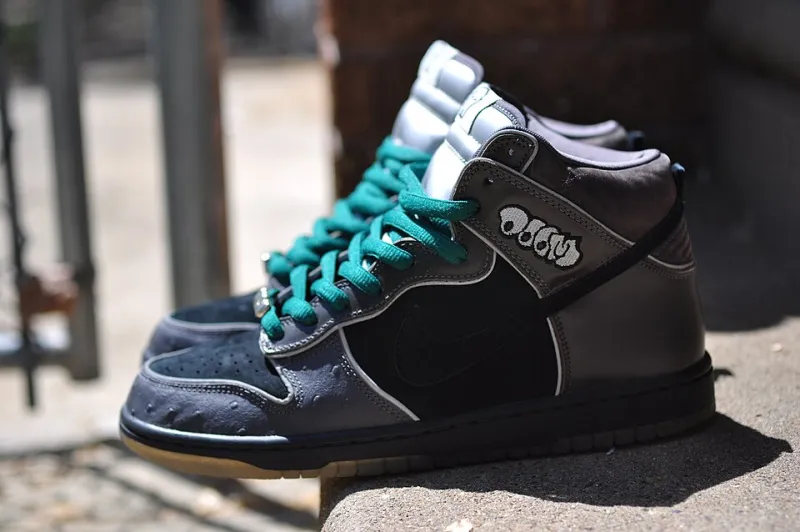
Photo: sneakerhead examining rare Nike Dunk sneakers collection display, via tiagobaumfeld.com.br
There's a specific kind of ache that sneakerheads know better than almost anyone else. It's not the sting of losing a raffle. It's not the frustration of a botched checkout. It's something quieter and way more persistent — the low hum of a pair you never got, a Dunk that lives rent-free in the back of your head years after the drop date passed and the resale prices climbed somewhere north of realistic.
Call it the grail effect. Call it sneaker grief. Whatever you name it, if you've been collecting Dunks for more than a minute, you've felt it.
Why Certain Pairs Hit Different
Not every missed drop becomes an obsession. You can miss a general release, shrug, and move on. But then there are those specific colorways — the ones tied to a moment, a memory, a version of yourself you were becoming when the shoe first dropped — and those are the ones that linger.
Part of what makes a Dunk a white whale isn't just the shoe itself. It's the context it arrived in. Maybe you were in high school when the SB Dunk Low Travis Scott dropped and your older cousin had a pair. Maybe you saw a particular regional collab on someone's feet at a tournament and the whole fit just made sense in a way you couldn't explain. The shoe becomes a symbol for something bigger — a feeling, a place in time, a version of cool you were reaching toward.
Psychologists call this "endowment effect" thinking, where we assign more value to things we almost had than things we never encountered. In sneaker culture, that effect gets amplified by every repost, every grail thread, every StockX listing that taunts you with a price you won't pay but keep checking anyway.
The Scarcity Machine and How It Works on You
Nike didn't accidentally create grails. Limited production runs, regional exclusives, collab drops with tiny allocations — these aren't just supply chain decisions, they're cultural engineering. Scarcity creates desire, and desire creates mythology.
The Dunk has been at the center of this machinery longer than almost any other silhouette. From the original "Be True to Your School" colorways in the mid-80s to the SB era's hyper-limited boutique exclusives in the early 2000s, the Dunk's history is basically a masterclass in manufactured want. And collectors aren't oblivious to this — most will tell you they know exactly what's happening — but knowing the trick doesn't make you immune to it.
Jordan, a 28-year-old collector from Atlanta who's been building his rotation since his sophomore year of high school, describes it plainly: "I know the game. I know they made 3,000 pairs on purpose. But that doesn't stop me from checking eBay at midnight for the Staple Pigeon Dunks like they're suddenly going to be $180." He laughs, but there's something real underneath it. The logic doesn't always reach the part of your brain that wants what it wants.
The Stories People Tell Themselves
What's fascinating about the grail obsession is how it evolves over time. In the early stages, it's pure want. You missed the drop, you're annoyed, you're watching the resale price spike in real time. But give it six months, a year, three years — and the story changes.
The shoe stops being just a shoe. It becomes a narrative. "That's the pair that got away." "If I'd had those, my collection would be complete." "Everything else I could sell, but if I ever find those at a fair price, they're mine."
Mia, a sneakerhead and sneaker reseller based in Chicago, has watched this pattern play out dozens of times in her community. "People romanticize the pairs they don't have way more than the ones they do," she says. "I've seen guys finally land their grail and then feel almost nothing. Because the hunt was the whole thing. The shoe was just the excuse."
That's a hard truth, but it tracks. The desire for a grail Dunk is often less about the object and more about the identity it represents — the collector who has the taste and the patience and the hustle to land something rare. The shoe is proof of concept. And when you finally get it, the proof is in your hands, but the concept — the chase — is over.
When the Hunt Becomes a Weight
There's a version of grail-hunting that's genuinely fun. It's the thrill of the search, the community you build comparing notes with other collectors, the satisfaction of knowing your history well enough to spot a legitimate pair at a decent price. That version is a feature of sneaker culture, not a bug.
But there's another version that's worth being honest about. The one where you're passing on solid pickups because you're "saving for the grail." The one where a shoe you've never owned is somehow defining your collection's identity. The one where you're spending real emotional energy on something that, at the end of the day, is a leather and rubber object that doesn't know your name.
Derek, a collector from Portland who spent four years chasing a specific SB Dunk collab before finally letting it go, talks about the shift in perspective with the kind of clarity that only comes from the other side of an obsession. "I was turning down trades that would've genuinely upgraded my rotation because I had this idea that nothing counted until I had that one pair. And then one day I just looked at what I actually owned and realized my collection was great. I'd been so focused on the ghost that I couldn't see the real thing."
He eventually found a pair — years later, at a price he was comfortable with — and says it felt more like closure than celebration. The pair is clean. He wears them occasionally. They're just shoes now, in the best possible way.
Moving On Without Giving Up
There's a difference between letting a grail go and betraying your collector identity. The sneakerheads who seem happiest in this culture are the ones who hold the grail loosely — they'd take it at the right price, in the right condition, but they're not letting it define what they have.
Some collectors set a hard ceiling: if the resale price crosses a certain threshold, the shoe graduates from "grail" to "museum piece" and gets removed from the active want list entirely. Others reframe the obsession as appreciation — they follow the shoe's cultural legacy, read about its history, rock similar colorways in other silhouettes — without needing to own the specific pair.
And some just wait. Sneaker culture has a long memory, but it also has a habit of cycling. Retros happen. Collabs get revisited. The pair that felt impossible in 2019 might have a spiritual successor dropping in 2026.
The Dunk That Lives in Your Head
Every serious collector has one. The pair that became more than a pair. And honestly, that's not a flaw in how we engage with this culture — it's kind of the whole point. The Nike Dunk has always been more than footwear. It's a canvas for identity, a timestamp for moments, a way of saying something about who you are and where you've been.
The grail obsession, at its best, is just that meaning turned up to eleven. The shoe matters because you made it matter. And whether you eventually land it or finally let it go, the story you built around it — that's yours to keep.