When the Grail Goes Silent: The Painful Reality of Dunks Too Far Gone to Wear
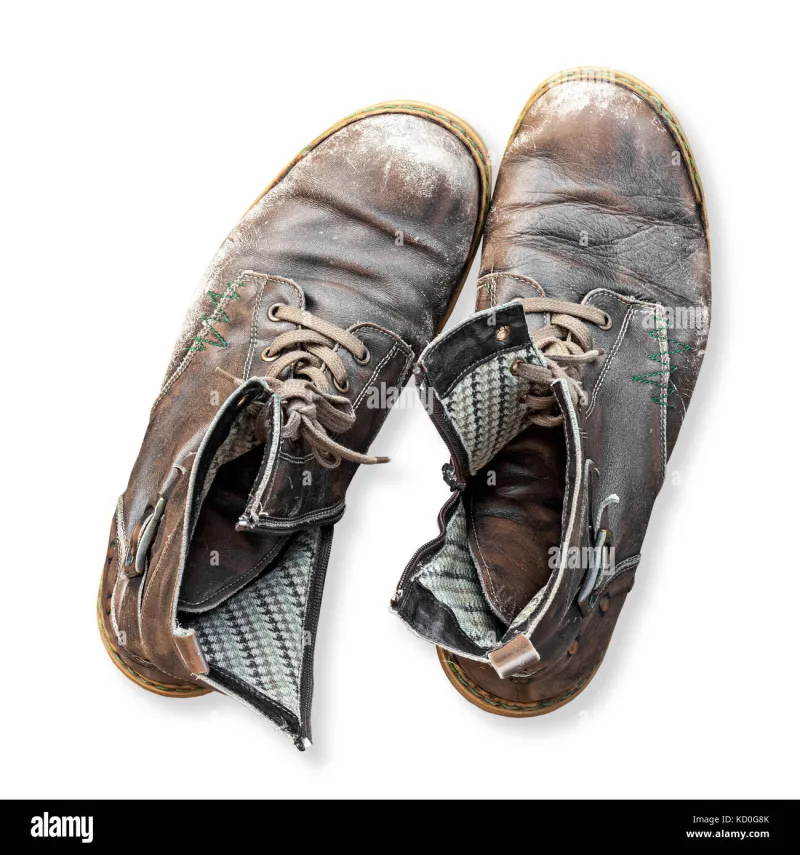
Photo: worn vintage sneakers display shelf collector storage boxes, via c8.alamy.com
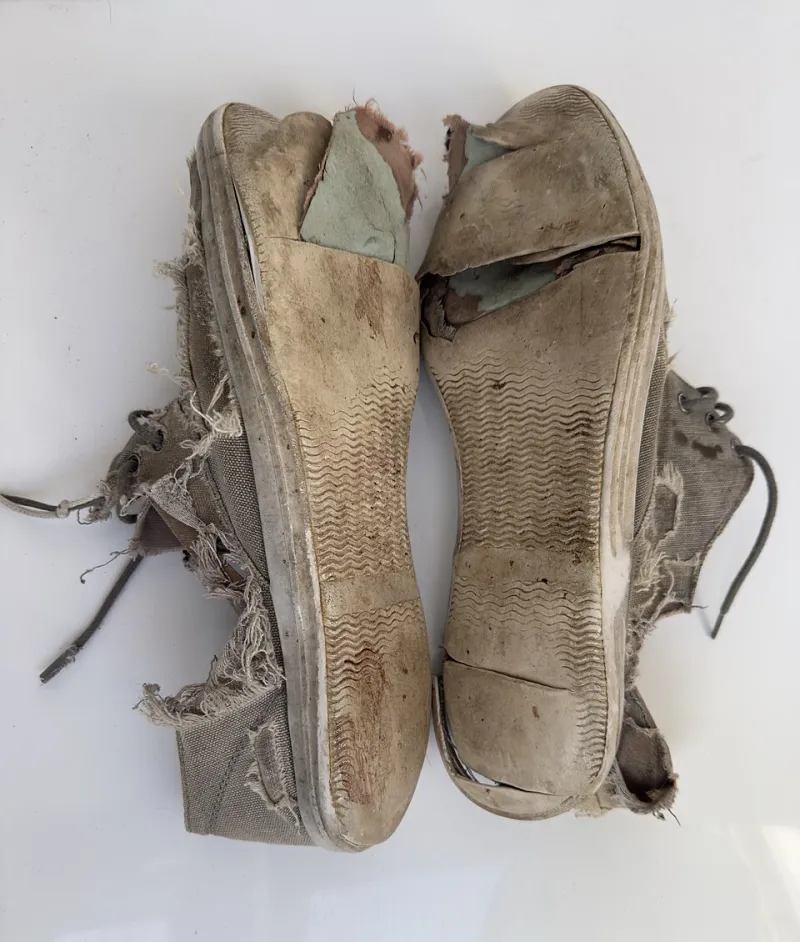
There's a specific kind of dread that lives at the bottom of a sneaker shelf. You know the spot — way in the back, behind the rotation pairs, behind the heat you're saving for the right occasion. Back there, in a box that probably hasn't been opened in months, sits a pair that used to mean everything. Maybe the midsole is yellowing beyond rescue. Maybe the leather is cracking along the toe box. Maybe the foam has compressed so completely that wearing them would feel like walking on cardboard. Whatever the damage, the result is the same: your holy grail has quietly become a relic, and you're not sure whether to mourn it or celebrate what it survived.
This is the part of sneaker collecting nobody really talks about. The hype drops, the resale flips, the grail hunts — those get all the attention. But the back half of the story, the part where time wins, sits in silence on a lot of shelves across the country.
The Slow Goodbye
For collectors who've been in the game long enough, the deterioration of a prized pair isn't usually sudden. It creeps. A small crack in the outsole. A little give in a midsole that used to feel locked in. A lace eyelet that's starting to pull from the upper. Each detail on its own is easy to rationalize away. Together, they tell a story you don't want to read.
Marcus, a collector out of Atlanta who's been building his Dunk collection since the early 2000s, describes the experience plainly. "I had a pair of '99 Unlucky 13s that I wore maybe four times total. Kept them iced out, thought I was doing everything right. One day I pulled them out and the glue on the sole had just let go. Not from wear — just from time. That hit different than I expected."
The phenomenon Marcus is describing has a name in collector circles: foam rot, or more broadly, material degradation. Polyurethane midsoles — the kind used in older Nike Dunks — are especially vulnerable. Without regular wear and exposure to mild stress, they can actually break down faster than a pair that gets rotated consistently. The cruel irony of sneaker preservation is that sometimes the most carefully stored pairs are the ones that crumble first.
The Display Case Debate
So what do you do when a grail crosses that threshold? The sneaker community is pretty split on this one, and the debate runs deep.
On one side, you've got the preservationists — collectors who believe that once a pair reaches a certain level of cultural or monetary significance, it belongs behind glass, full stop. These folks aren't just protecting an investment; they're curating history. A pair of original 1985 Dunk Highs in clean condition is a primary source document of American sneaker culture. Letting them crumble on feet feels almost irresponsible to that camp.
On the other side, there's a growing contingent of collectors who push back hard on that logic. Their argument: a shoe that never gets worn is a shoe that never fulfilled its purpose. Sneakers are tools of expression, of movement, of identity. Locking them away indefinitely is, in their view, a kind of betrayal of what the culture is actually about.
Deanna, a collector and community organizer based in Chicago, puts it bluntly. "I've seen people treat their Dunks like they're paintings in a museum. And I get it, I really do. But there's something that feels off about a sneaker that never touches the ground. At some point you have to ask yourself — am I a collector or am I a storage facility?"
Neither position is wrong. They just reflect different relationships with the object, and honestly, with the culture itself.
The Emerging Market for Retired Pairs
Here's where things get interesting from a collector's standpoint: there's actual money moving in the space of permanently retired Dunks. Not just high-condition resale — we're talking about pairs that are explicitly marketed as display-only, with full disclosure of their fragile or degraded state, selling to buyers who want them specifically because they'll never be worn again.
It sounds counterintuitive until you think about it from a historical preservation angle. Museums buy degraded artifacts all the time. The condition tells part of the story. A pair of Dunk Lows with a cracked midsole and faded suede that once belonged to a notable figure in the skate scene isn't less valuable because of the wear — in some cases, it's more valuable. The patina is the provenance.
Platforms like StockX and GOAT have started seeing more listings with explicit "display only" or "parts/restoration" tags, and niche collector communities on Discord and Reddit are building entire subcultures around sourcing, documenting, and archiving pairs that have aged out of wearability. It's a corner of the sneaker world that operates more like antique dealing than streetwear trading.
Restoration: The Third Option
Before you write off a deteriorating grail entirely, it's worth acknowledging the restoration route — though it comes with its own set of complications.
Sneaker restoration has gotten genuinely sophisticated over the last decade. Shops across the country now offer midsole repaints, sole swaps, leather reconditioning, and even foam replacement on select models. For some collectors, restoration is the obvious answer: bring the pair back to a wearable state, honor its history, and get back out there.
But purists often push back on restoration too, arguing that a rebuilt sole or repainted midsole changes the object in ways that matter. If the point of a grail is authenticity — the actual materials, the actual history — then covering up the age with fresh paint feels like a compromise. It's a philosophical debate as much as a practical one.
What most restoration pros will tell you is that the decision depends on what the pair means to you specifically. Are you preserving it for value, for memory, for display, or for wear? The answer to that question should drive everything else.
Learning to Let Go (Or Not)
Maybe the most honest thing that can be said about Dunks that have reached the end of their wearable life is this: they force you to get clear about why you got into collecting in the first place.
If the answer is investment, then condition is everything and degradation is a loss. If the answer is culture, then a pair that's been worn to near-destruction might actually represent the fullest version of what a sneaker can be. If the answer is personal connection — a pair tied to a specific memory, a person, a moment in your life — then neither resale value nor wearability is really the point.
Sneakers don't last forever. The Dunk, for all its cultural staying power, is still a physical object made of rubber and foam and leather and thread. Time gets everything eventually. The question isn't whether your grails will deteriorate — it's what you decide those deteriorated pairs are still worth to you when they do.
For some collectors, that answer is everything. For others, it's a quiet goodbye and a cleared shelf. Both are valid. Both are part of the culture.
Lace up while you can. The clock's always running.