Falling Apart at the Seams: The Hard Truth About Why Modern Dunks Don't Last Like They Used To
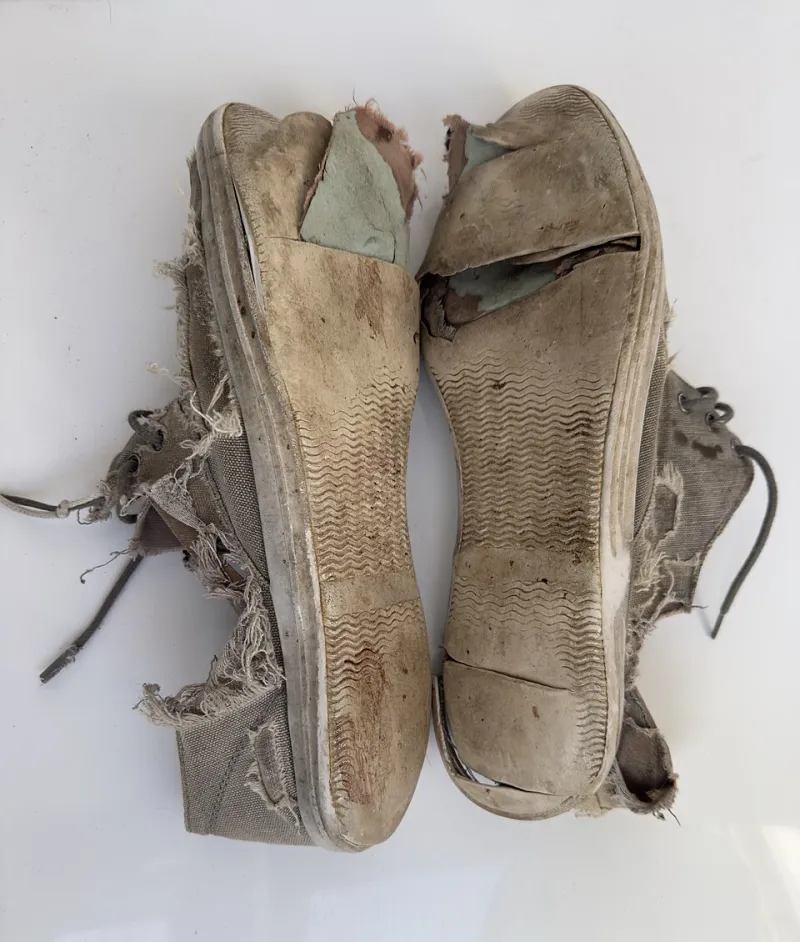
Photo: Wolfmann, CC BY 4.0, via Wikimedia Commons
There's a particular kind of heartbreak that hits different in sneaker culture. It's not missing a drop. It's not losing a bid at the last second. It's pulling your favorite Dunks out of the box after six months of careful wear and watching the sole start to delaminate before you've even broken them in properly. If that sounds familiar, you're not alone — and you're not being dramatic.
Across collector forums, Discord servers, and repair shop counters from Atlanta to Portland, a quiet frustration has been building for years. The Dunk, once a shoe built tough enough to survive actual basketball courts and decades of storage, seems to be aging faster than it used to. And the people who know these shoes best — the ones who've worn, collected, and stitched them back together — have some things to say about why.
The Benchmark: What Older Dunks Actually Felt Like
Ask any collector who's been in the game since the early 2000s and they'll tell you the same thing. Vintage Dunks had a solidity to them. The leather was thicker, the stitching tighter, the midsole more resistant to the kind of compression creasing that plagues modern pairs after just a few months of rotation.
Marcus T., a Chicago-based collector with over 200 pairs spanning nearly three decades, put it bluntly: "I've got 2001 pairs that still look better than some 2022 releases I've barely touched. That's not nostalgia talking. That's just leather quality."
The difference isn't subtle once you know what to look for. Older Dunks used full-grain leather that developed a patina over time — the kind of wear that collectors actually valued. Today's releases lean heavily on thinner, more processed leathers and synthetic materials that don't age gracefully. They don't break in. They break down.
Where the Quality Shift Actually Comes From
This isn't a Nike-specific problem, but it's a very visible one given how much attention the Dunk gets. Industry-wide pressures on athletic footwear manufacturing have pushed brands toward lighter, cheaper materials and faster production cycles. The economics are real: when a silhouette is dropping hundreds of colorways a year across GR releases, collabs, and regional exclusives, maintaining the same material standards across every single pair becomes a different kind of challenge.
David K., a footwear material consultant based in Los Angeles who's worked with multiple brands on production quality assessments, explained the chain of decisions that leads to what ends up on your feet. "When volume increases dramatically, sourcing shifts. You're not pulling from the same tanneries or the same material suppliers at scale. The spec might say leather, but the grade, the thickness, the finishing process — all of that can vary significantly depending on where and how it's produced."
Beyond the leather itself, adhesive formulations for outsole bonding have also changed. The delamination problem — soles peeling away from the upper, sometimes within a year of purchase — is something repair specialists cite constantly. Heat, humidity, and even storage conditions can accelerate the process, but the underlying issue is that modern bonding compounds don't always have the same long-term hold as older methods.
The Storage Problem Nobody Talks About
Here's a layer to this that even experienced collectors sometimes overlook: how you store your Dunks matters more now than it ever did with older pairs. The materials in modern releases are more reactive to environmental conditions. Yellowing midsoles, cracking overlays, and foam breakdown are all accelerated by poor airflow, high humidity, or exposure to UV light.
Jamila R. runs a sneaker restoration and repair operation out of Brooklyn and has seen the full spectrum of what time and neglect do to modern pairs. "People come in with shoes they bought two years ago, never worn, still in the box, and the sole is already starting to go. The materials are just more fragile. Deadstock doesn't mean preserved anymore — it can actually mean the deterioration started before the shoe ever hit the floor."
Her advice: ditch the original box for long-term storage, invest in a climate-controlled environment if you're serious about preservation, and use silica gel packs religiously. It's maintenance work that previous generations of collectors simply didn't have to think about.
What Repair Specialists Are Seeing on the Bench
Walk into any reputable sneaker repair shop right now and ask them what's coming through the door. The answer tells a story. Sole regluing on shoes under two years old. Stitching failures on uppers that haven't seen hard wear. Leather cracking on pairs that were rotated carefully and cleaned properly.
Jamila and others in the restoration space have adapted by stocking adhesives specifically formulated for modern synthetic leathers and by offering preventative services — sole icing, toe box reinforcement, midsole protection — that are essentially an acknowledgment that the shoe needs help surviving its own lifespan.
"We're doing work now that used to only make sense on vintage pairs," she said. "Now people are bringing in stuff from last season. That's a real shift."
The repair community has also become an informal quality-control voice. When the same failure points show up on the bench repeatedly — same seam, same sole separation location, same overlay cracking — it stops being coincidence and starts being a design or material pattern worth paying attention to.
What Collectors Are Actually Doing About It
The response from the collector community has been practical and creative in equal measure. Sole protectors applied immediately out of the box are now standard practice for anyone serious about longevity. Crep Protect, Jason Markk, and similar brands have built entire product lines around the reality that modern sneaker materials need active maintenance.
Some collectors have started applying leather conditioners to Dunk uppers from day one — not waiting for dryness or cracking to set in, but treating it as preventative care the same way you'd condition a leather jacket before the first wear. Others are having cobblers reinforce stitching on new pairs before they ever hit the pavement.
Marcus has taken it further. He now buys doubles of any pair he plans to actually wear, keeping one as a reference and rotating the other carefully. "It sounds extreme, but when you've watched enough pairs fall apart before they should, you start treating the good ones like investments. Because that's what they are."
The Bigger Picture
None of this means the Dunk is a bad shoe. It's still one of the most culturally significant silhouettes in sneaker history, and there are still releases that hit a quality benchmark worth celebrating. But the gap between what these shoes used to be capable of and what they're delivering now is real, and it's worth naming.
For collectors, that means building care routines from the jump, being more selective about which pairs get actual wear versus display treatment, and building relationships with repair specialists before you need them in a crisis.
The Dunk deserves to last. It has the history, the cultural weight, and the design legacy to justify serious care. The shoes just need a little more help getting there than they used to.